The Energy transition is urgently needed

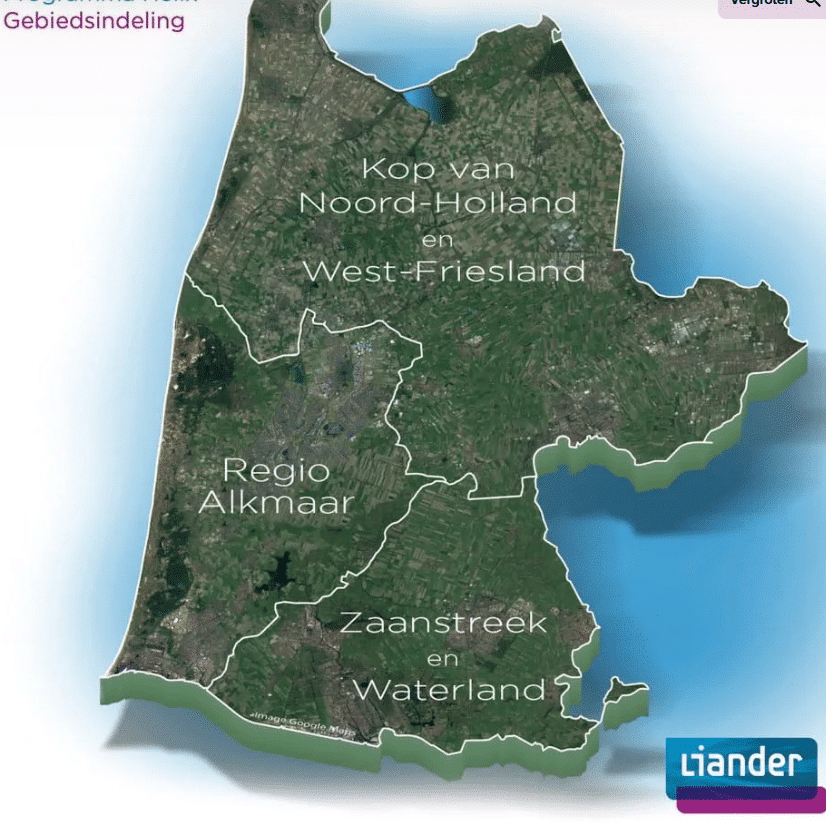
Noord-Holland is developing rapidly. The number of residents and businesses is growing — and with it, the demand for energy. To be prepared for the future, we will be expanding and upgrading the energy grid in the coming years. We are installing cables and building electrical substations. Together with contractors and suppliers, Liander is working on a reliable power network. This is how we prepare the energy system for a sustainable future.
Why was BAEKEN needed?
Key aspects of this project were that design and location choices for the new cables had to be made in a timely manner, followed by permit investigations and arranging permission from all landowners. This multitude of interfaces and stakeholders makes the project complex and requires a great deal of preparation before physical execution can begin. Liander already had a clear schedule for each project segment, indicating the most important phases and their duration. However, it appeared that the projects were not yet properly managed and that there were too few checkpoints to guarantee that the project would proceed according to schedule. BAEKEN had been brought into the project to ensure that those involved had confidence in the process and that deadlines were not only made clear, but also met.

How did we approach this project?
-
Detailing the schedule
One of the most important action points was to become acquainted with and gain insight into the process of laying cables. In addition, it was important to get a handle on all the activities within a phase (CD/BD/DD) [moreInfo_open]CD/BD/DD
CD (Conceptual Design): First sketch with the main lines of the network, including positioning and choice of materials,
BD (Basic Design): Elaboration with detailed drawings and technical specifications for reliability and capacity,
DD (Detailed Design): All technical details and implementation documents are ready for realization. [moreInfo_close] This made it clear what everyone was responsible for, when these activities were expected to take place, and what the dependencies were. With all this information, I fleshed out the schedule so that everyone had a clear idea of what activities needed to be carried out in which phase. -
Detailed schedule and problem solving
During the creation of the detailed schedule, the first problems with the ongoing projects quickly became apparent. These projects were starting to fall behind schedule, in part due to the process of obtaining permission from landowners proving more complicated than anticipated. Together with the omgevingsmanagers (site managers), we decided to further break down the work. This resulted in better cooperation, more benchmarks during the phases, and a smoother, accelerated procedure for obtaining permission from landowners. [internalLink_open]Read more about our advice and consultancy services here.[internalLink_close]
-
Guidance based on the schedule
Now it is important that everyone gets used to steering the projects according to the schedule and to keep them up to date. This is where I/we take the lead in getting the stakeholders on board.
What has been used?

Microsoft Project
for planning and project controls

Stakeholder management
for effective communication and cooperation

Oracle Primavera Cloud (OPC)
for planning and project controls

Curious if we can do something for you? Or check out similar projects.
Of bekijk andere projecten
De Knoop @ Rijksvastgoedbedrijf
When Rijksvastgoedbedrijf (RVB) acquired the former Knoop barracks in Utrecht in 2011, it had the ambition to transform
Business Park @ Aviolanda
Business Park Aviolanda houses companies and training institutes in the field of aircraft engineering and maintenance.
Sustainable energy use @ Croonwolter&Dros
Commissioned by Vattenfall, Croonwolter&Dros is realizing the heat station “De Sleutel” (The Key) near Leiden, alongside