Shaping the future of terminals

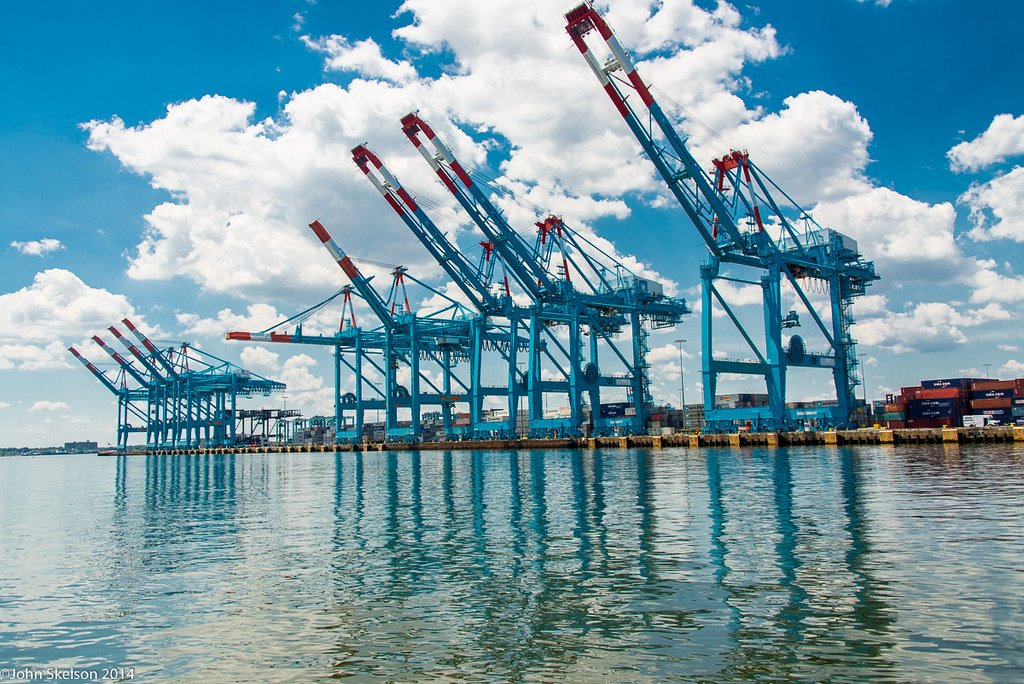
APM Terminals (APMT) is a global leader in container terminals ownership and operations, managing a network of over 70 terminals across continents. APMT is a part of A.P. Møller-Maersk, which also encompasses the shipping company Maersk.
They are devoted to being world’s best terminal operating company through focusing on Service, Innovation, Decarbonization and Growth. BAEKEN contributes to a variety of transformative projects for APMT, ranging from decarbonization and expansion of their current terminals to the acquisition and construction of new terminals, helping them reach their ambitious goals.
How did BAEKEN support?
To lead the way in sustainability, APMT has set ambitious targets: run a completely net-zero terminal company before 2040 . These goals lead to complex requirements for their current and future terminals. This is where BAEKEN helps out. We joined and supported a specialised team that focuses on the biggest projects, the Bid Team. The Bid Team bridges the gap between the commercial and the technical side of the organisation. We manage this important interface and coordinate the technical development of the projects during the pre-investment phase.

How did we approach this project?
-
Defining project requirements
Every project is different, working in all regions of the world with teams from 3 to 50 people requires bespoke solutions. Setting clear goals, requirements and defining the process to get to a complete business case supported by all functions is where we start.
-
Crafting a unified vision
A compelling project story board is our most valuable tool for team alignment by talking them through the ‘what’, ‘why’ and ‘how’ of the project. We clarify the current state of the terminal, the vision for change and the path to execution. The story ensures everyone on the team is fully aligned with the project’s objectives and the plan forward. The discussions following the creation of this story board gradually shape the solution for the business case.
-
Defining a detailed project scope
We list in detail how we are planning to transform the terminal to fulfil all requirements, this is the scope. In the scope sheet we catalogue all the elements needed for the transformation of the terminal, along with their expected quantities. We can easily cross reference this sheet with the requirements at any moment to check if they are still aligned. In these early stages of the project many assumptions must be made. Cataloguing these assumptions along with the developed scope and assessing how they can impact the business case are crucial to the quality of the case.
-
Building a cohesive timeline, budget, and risk management plan
We develop a project timeline using Primavera P6. This creates the first insight into the project timeline. Using the combined knowledge of the team we create cost estimates and link this to the schedule. Throughout the development of the solution, risks are identified and quantified. When we can, we perform a probabilistic risk analysis and adjust the timeline and cost estimate accordingly.
-
Complete business case
We do thorough quality checks of all inputs and make sure all information is aligned. We compile and present the information in a simple and complete way ready to be signed off by all stakeholders. This package is then used to support the investment decision process.
What has been used?

Primavera P6
for planning and project controls
Oracle Primavera Cloud (OPC)
for planning and project controls

Risk Management
for managing project uncertainties

Cost Management
for managing the project costs

Stakeholder Management
for effective communication and collaboration
Curious if we can do something for you? Or check out similar projects.
Of bekijk andere projecten
De Knoop @ Rijksvastgoedbedrijf
When Rijksvastgoedbedrijf (RVB) acquired the former Knoop barracks in Utrecht in 2011, it had the ambition to transform
Business Park @ Aviolanda
Business Park Aviolanda houses companies and training institutes in the field of aircraft engineering and maintenance.
Sustainable energy use @ Croonwolter&Dros
Commissioned by Vattenfall, Croonwolter&Dros is realizing the heat station “De Sleutel” (The Key) near Leiden, alongside